Garlic, the aromatic heart of countless culinary traditions, demands efficient and consistent preparation, especially in the demanding environment of a professional kitchen. For any high-volume food establishment, from bustling restaurants to large-scale catering operations, an Industrial Garlic Press isn’t just a convenience; it’s a strategic necessity. This robust tool elevates garlic preparation, ensuring both speed and quality that manual methods simply can’t match, positioning your brand, “Nhà Bếp Thông Minh,” at the forefront of kitchen innovation.
The Evolution of Garlic Preparation: From Knife to Industrial Press
For centuries, chefs relied on the humble knife to mince garlic, a time-honored but labor-intensive task. The modern garlic press, in its foundational form, emerged in 1948, a clever invention by Swiss bicycle mechanic Karl Zysset, who ingeniously applied the leverage principle of bicycle brakes to a kitchen utensil. His creation, the “Susi 3,” marked a pivotal shift, offering a cleaner, faster way to process garlic without the lingering odor on one’s hands. Fast forward to today, and while handheld presses are common in homes, the industrial version represents a leap in engineering and capacity, specifically designed to meet the rigorous demands of commercial food service. These aren’t just bigger versions of your grandma’s garlic press; they are heavy-duty workhorses engineered for continuous, high-volume operation.
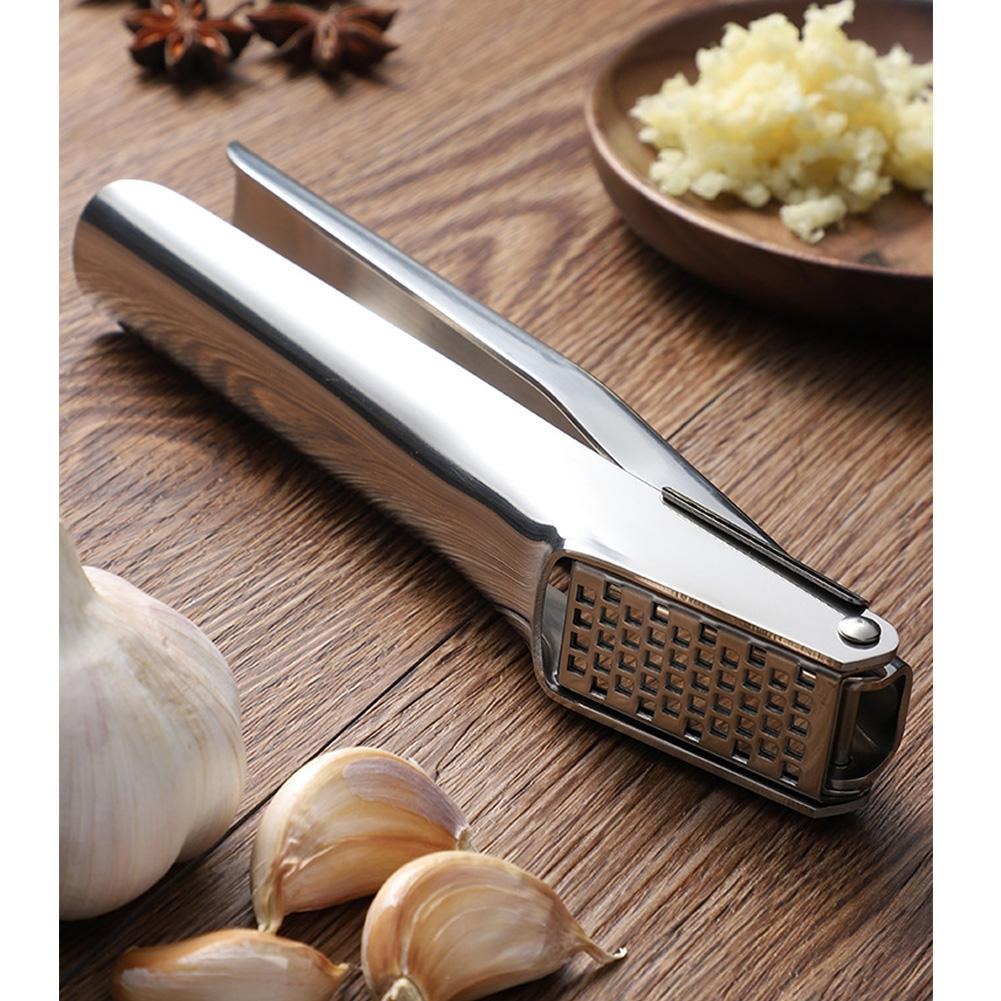
Anatomy of Efficiency: How an Industrial Garlic Press Works
At its core, an industrial garlic press operates on a simple yet effective principle: mechanical force. Typically, it features two sturdy handles, a chamber (often generously sized to accommodate multiple cloves), and a robust plunger. When the handles are squeezed, the plunger drives the garlic cloves through a finely perforated grid, extruding them into a consistent mince or paste. The magic truly happens in the materials and construction. Unlike their lighter household counterparts, industrial models are built to last, frequently employing high-grade stainless steel (often 18/8 or even 18/10 for superior corrosion resistance) or heavy-duty cast aluminum. These materials are chosen not just for durability but also for their non-reactive properties, ensuring the pure flavor of the garlic is preserved and the tool withstands repeated exposure to garlic’s acidic compounds. Many advanced models also integrate smart design features like removable grids for thorough cleaning and self-ejecting mechanisms for peels, streamlining the process even further.
Why Every Professional Kitchen Needs an Industrial Garlic Press
Integrating an industrial garlic press into your kitchen workflow offers a multitude of advantages that directly impact efficiency, quality, and operational costs.
Speed and Volume: Unlocking Culinary Flow
Time is money in a professional kitchen, and manual garlic mincing is a significant time sink. An industrial press dramatically cuts down prep time by processing several cloves, often unpeeled, in a single, swift squeeze. Imagine the hours saved over a busy service week, freeing up your culinary team for more complex tasks. This efficiency allows for greater output without compromising on the freshness of ingredients.
Consistency in Texture and Flavor: Elevating Every Dish
One of the hallmarks of a great dish is consistency. An industrial garlic press delivers a uniform mince or paste every time, ensuring that the garlic flavor disperses evenly throughout sauces, marinades, dressings, and stir-fries. This consistency is difficult to achieve by hand, where mince sizes can vary, leading to uneven flavor profiles. Furthermore, the pressing action releases more of garlic’s natural oils and potent compounds, intensifying its flavor and aroma. Some culinary experts even suggest that pressing can yield a lighter, more delicate flavor by separating the bitter central stem, creating a nuanced profile often preferred in fine dining.
Hygiene and Labor Saving: A Cleaner, Smarter Operation
Direct contact with large quantities of garlic can lead to persistent odors on hands, an issue minimized by the contained nature of a garlic press. Beyond that, modern industrial designs prioritize ease of cleaning, often featuring removable components that are dishwasher safe, promoting superior kitchen hygiene. For larger food processing facilities, fully automated garlic peeling and pressing machinery takes this a step further, drastically reducing manual labor and human contact with the product, a critical factor in food safety and cost-efficiency.
Durability and Longevity: Built to Withstand the Heat
Industrial kitchens are tough on equipment. An industrial garlic press is designed with this in mind, crafted from heavy-duty materials that resist bending, breaking, and corrosion under constant use. This means a longer lifespan for your tools and fewer replacements, translating into long-term savings for your business.
Versatility Beyond Garlic: A Multi-Tasking Marvel
While its primary purpose is garlic, a good industrial garlic press is often versatile enough to handle other small, fibrous ingredients. Think ginger, shallots, capers, anchovies, or even crushing small quantities of whole spices. This multi-functionality adds further value, reducing the need for specialized tools and optimizing your kitchen’s gadget footprint.
“The true value of an industrial garlic press lies not just in its ability to mince garlic, but in its transformative impact on kitchen workflow and culinary consistency,” advises Dr. Anya Sharma, a leading food technology consultant. “It’s a foundational tool for operational excellence, allowing chefs to focus on artistry while ensuring ingredient integrity and speed.”
Choosing Your Workhorse: Types and Key Features of Industrial Garlic Presses
When selecting an industrial garlic press for your operation, consider the various types and their defining features:
Manual vs. Electric
- Manual Industrial Presses: These are the most common for many commercial kitchens. They rely on leverage and operator strength but are built with reinforced hinges, larger chambers, and ergonomic handles to withstand heavy use. They are affordable and simple to maintain.
- Electric Garlic Processing Machinery: For very large-scale food production or ingredient processing, fully automated electric systems exist that can peel and press vast quantities of garlic, effectively turning cloves into paste with minimal human intervention. While not typically a “press” in the handheld sense, they represent the pinnacle of industrial garlic processing.
Materials Matter
- Stainless Steel (18/8 or 18/10 Grade): This is the gold standard for industrial applications. It offers exceptional corrosion resistance (especially 18/10, which handles acidic environments even better), is non-reactive, hygienic, and incredibly durable. Look for certifications like FDA compliance.
- Heavy-Duty Cast Aluminum/Zinc: While lighter than stainless steel, these materials can still offer significant strength and are often more economical. Ensure they are food-grade and have protective coatings if necessary to prevent reactivity with acidic foods.
- Reinforced Plastics: Some designs may incorporate high-strength, food-safe plastics for handles or other non-pressing components, balancing durability with ergonomic comfort.
Ergonomics and Smart Design
- Robust Handles and Leverage: Industrial presses need substantial handles that provide excellent grip and leverage, reducing strain on the user, even with continuous use.
- High Capacity Chamber: The ability to press multiple cloves simultaneously significantly enhances speed.
- Removable or Hinged Grid: Essential for thorough cleaning, preventing garlic residue buildup that can harbor bacteria and affect future flavors.
- Integrated Cleaner/Self-Ejecting Mechanism: A small pin-grid cleaner or a self-ejecting design that pushes out peels vastly simplifies cleanup and maintenance.
- Sturdy Construction: Look for minimum wall thicknesses (e.g., 1.2mm for stainless steel) and solid interlocking mechanisms to prevent deformation under pressure.
Maximizing Performance: Tips for Using and Maintaining Your Industrial Garlic Press
Getting the most out of your industrial garlic press requires a few best practices:
- Preparation is Key: Many industrial presses can handle unpeeled garlic, which saves a tremendous amount of prep time. However, for an even finer mince and to minimize residual peel, some chefs prefer a quick, light peel.
- Load Smart: Don’t overload the chamber. While industrial presses have higher capacities, respect their limits to ensure smooth operation and complete extraction.
- Firm, Steady Pressure: Apply firm, consistent pressure when squeezing the handles. This ensures all the garlic is forced through the grid effectively.
- Immediate Cleanup: The most crucial tip for any garlic press, industrial or otherwise! Rinse the press immediately after use to prevent garlic residue from drying and hardening in the perforations.
- Thorough Cleaning: For models with removable grids, separate the components and clean them individually. Most high-quality stainless steel presses are dishwasher safe, but a quick hand wash with a brush often suffices. Consider a small, stiff brush specifically for cleaning the holes.
- Addressing Residue: It’s common for a tiny bit of garlic or peel to remain. Scrape it out with a small knife or the integrated cleaning tool. This minimal waste is often negligible compared to the time saved.
The Market Pulse: Trends Shaping the Industrial Garlic Press Sector
The market for garlic presses, particularly the industrial segment, is experiencing robust growth. Driven by a burgeoning foodservice industry globally and an increasing consumer demand for fresh, flavorful ingredients, commercial kitchens are continually seeking tools that deliver efficiency without sacrificing quality. We project the global garlic press market to surpass $375 million by 2033, with a steady Compound Annual Growth Rate of 5%.
Emerging trends are also influencing product development. Manufacturers are focusing on:
- Sustainability: The demand for eco-friendly materials and production processes is growing.
- Smart Kitchen Integration: While less common for basic presses, larger processing units are seeing advancements in automation and connectivity.
- Ergonomic Innovation: Continuous improvement in handle design and leverage mechanisms to reduce user fatigue.
- Customization: Brands like “Nhà Bếp Thông Minh” have opportunities to offer presses tailored to specific kitchen needs or branding.
Geographically, North America and Europe remain mature markets with established brands, but the Asia-Pacific region presents significant growth potential due to its expanding middle class and love for culinary innovation.
FAQs about Industrial Garlic Presses
Q: What is the primary advantage of an industrial garlic press over a home model?
A: The main advantages are superior durability, larger capacity for multiple cloves, more robust construction materials (like 18/10 stainless steel), and often more efficient cleaning mechanisms, all designed to withstand continuous, heavy use in a commercial setting.
Q: Can industrial garlic presses handle unpeeled garlic?
A: Absolutely! Most high-quality industrial garlic presses are designed to efficiently press unpeeled garlic cloves. The peel is typically left behind in the chamber for easy disposal, saving significant preparation time.
Q: What materials are best for a durable industrial garlic press?
A: High-grade stainless steel (especially 18/8 or 18/10) is generally considered the best due to its exceptional durability, corrosion resistance, non-reactivity with garlic acids, and ease of hygiene. Heavy-duty cast aluminum can also be a good, more economical option.
Q: How do I ensure proper cleaning of an industrial garlic press?
A: To ensure proper cleaning, rinse the press immediately after use to prevent garlic residue from drying. Many models have removable grids or are dishwasher safe. For thorough cleaning, use a small brush to dislodge any garlic bits stuck in the perforations.
Q: Do industrial garlic presses affect the flavor of garlic differently than mincing with a knife?
A: Yes, many culinary experts believe pressed garlic has a more intense flavor due to the greater rupture of cell walls, releasing more allicin. Some also note it can produce a lighter, more delicate flavor by excluding the bitter central stem often found in hand-minced garlic.
The Smart Kitchen’s Edge: A Future Forged in Flavor
For “Nhà Bếp Thông Minh,” embracing the power of the industrial garlic press is more than just selling a kitchen tool; it’s about empowering culinary professionals to create exceptional dishes with unparalleled efficiency. By understanding market trends, focusing on innovative designs, and prioritizing the robust quality that commercial kitchens demand, we can ensure our brand not only meets but anticipates the evolving needs of the food service industry. The future of garlic preparation is smart, efficient, and exceptionally flavorful, and your industrial garlic press is at the heart of that revolution. Let’s continue to press forward, delivering excellence one clove at a time.