The humble Garlic Press might just be the unsung hero of countless kitchens, transforming whole cloves into a fine, flavorful mince with a simple squeeze. For anyone who loves cooking with fresh garlic but dreads the sticky, pungent residue on their fingers or the tedious chopping, this ingenious kitchen tool is a true game-changer. It streamlines preparation, saving precious time and effort, and ensures a consistent result every time, making it an indispensable gadget for home cooks and seasoned chefs alike. Let’s delve into the world of the garlic press and discover why it deserves a prime spot in your culinary arsenal.
|
Our Picks for the Best Garlic Press in 2026
As an Amazon Associate I earn from qualifying purchases.
|
||
| Num | Product | Action |
|---|---|---|
| 1 | Vantic Garlic Press Rocker - Stainless Steel Garlic Crusher, Mincer and Chopper with Peeler & Scraper, Easy Kitchen Gadget for Effortless Smashing |

|
| 2 | KITCHENDAO Heavy-Duty Garlic Press with Built-in Scraper & Cleaning Pusher, No Peeling Garlic Crusher with Large Chamber, Zinc Alloy Garlic Mincer, Dishwasher Safe |
|
| 3 | Zulay Kitchen Premium Garlic Press Set - Rust Proof Professional Garlic Mincer Tool - Easy-Squeeze, Easy-Clean with Soft, Ergonomic Handle - Silicone Garlic Peeler & Brush (Silver) |
|
| 4 | Kuhn Rikon Epicurean Garlic Press, Stainless Steel, 6.5 x 1 x 1.5 inches, Silver |
|
| 5 | Kitchen Garlic Press, Rust Proof & Dishwasher Safe Garlic Mincer, Durable Garlic Crusher Set with Peeler&Brush, Easy to Clean and Squeeze, Matte |
|
| 6 | Garlic Press Stainless Steel,Premium Garlic Mincer Tool,No Need to Peel Garlic Ginger Crusher & Masher Easy Squeeze Large Trough Ergonomic Handle,Rust Proof,Dishwasher Safe (5 Years Warranty) |
|
| 7 | Kitessensu High Effective Garlic Press With Studs, Heavy Duty Garlic Mincer, Easy to Squeeze and Clean, Rust Proof, Ginger Crusher- Imperial Silver |
|
| 8 | GORILLA GRIP Garlic Press and Peel Set, Heavy Duty Mincer Tool, Large Ergonomic Handle, Easily Mince and Crush Garlics, Ginger, Nuts, Seeds, Peeler Included, Peeling Cloves, Kitchen Gadgets, Black |
|
| 9 | OXO Good Grips Heavy Duty Garlic Press, Die-Cast Zinc, Black |
|
| 10 | No Peeling Required Garlic Press Stainless Steel with Detachable Handle for Fine Mincing-Premium Garlic Mincer Tool, Rust-Proof, Easy to Clean, Dishwasher Safe Garlic Crusher with Lifetime Replacement |
|
History and Evolution of the Garlic Press
From Ancient Roots to Modern Innovation
Garlic itself boasts a rich history, cherished in cuisines worldwide for centuries. While humans have been crushing garlic since ancient times using rudimentary methods, the concept of a dedicated garlic press is a relatively modern marvel. Early methods involved pounding or rough chopping, far from the efficient tools we use today. The true innovation that led to the modern garlic press we recognize was driven by a desire for convenience and consistency.
Karl Zysset and the Iconic Susi 3
The credit for the modern garlic press, with its characteristic lever-action design, goes to Karl Zysset, a Swiss bicycle mechanic from Lyss. In 1948, Zysset ingeniously adapted the principles of bicycle brakes – specifically the leverage and practical mechanics – to create a tool for crushing garlic. This invention, originally named the Susi 3, revolutionized garlic preparation by allowing users to efficiently mince cloves, often without even peeling them, and without direct hand contact. Zysset went on to found the Zyliss company in 1951, which propelled the Susi 3 to global popularity. The lasting impact of Zysset’s design was even recognized by the Swiss Post, which issued a special stamp featuring the Susi 3 in 2024, cementing its place in kitchen innovation history.
Understanding the Anatomy and Mechanics of a Garlic Press
A garlic press, or garlic crusher, typically resembles a nutcracker, designed for a singular, potent purpose: transforming garlic cloves into a ready-to-use paste.
How Does a Garlic Press Work?
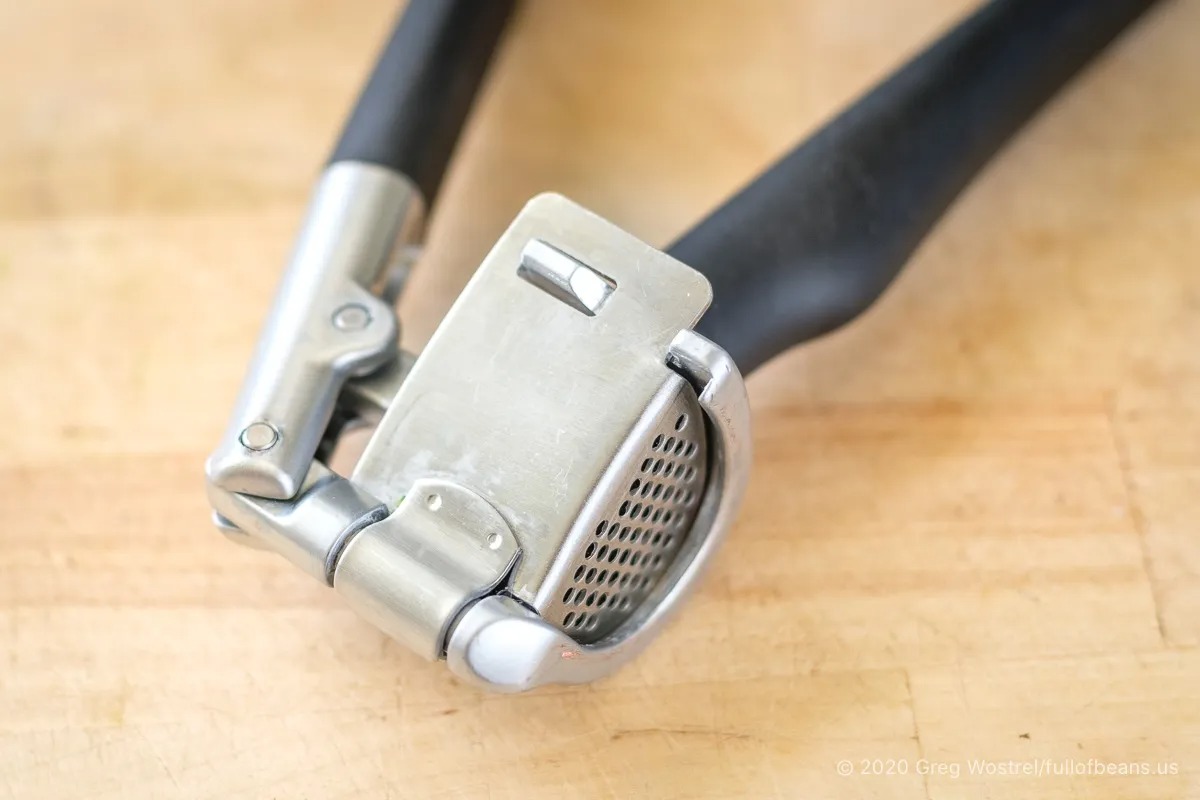
At its core, a classic lever-action garlic press consists of two handles, a hopper (a chamber where the garlic clove is placed), and a plunger with a perforated screen of small holes. When the handles are squeezed together, the plunger pushes the garlic clove through these holes. This action extrudes the garlic flesh, turning it into a fine mince or purée while trapping the skin (if unpeeled) within the hopper. The mechanical advantage provided by the lever mechanism means minimal effort is required to exert significant force, making quick work of even tough cloves. Modern designs often incorporate features like built-in cleaning tools, ergonomic handles for comfort, and durable materials like stainless steel or die-cast aluminum to ensure longevity and ease of maintenance.
Unleashing Flavor: How to Use a Garlic Press Effectively
Using a garlic press is incredibly straightforward, but a few simple tips can help you get the most out of your tool and achieve the best culinary results.
To Peel or Not to Peel: That is the Question
One of the most debated topics among garlic press enthusiasts is whether to peel the cloves before pressing. Many presses are designed to handle unpeeled garlic, with the skin remaining in the hopper while the garlic passes through the holes. This is a significant time-saver and keeps your hands clean. However, some culinary experts suggest that pressing unpeeled cloves can leave behind a substantial amount of unpressed garlic in the chamber, potentially leading to a bit of waste. For maximum yield, a quick peel with a silicone garlic peeler or the flat side of a knife can be beneficial.
Step-by-Step Guide to Perfect Pressed Garlic
- Prepare Your Cloves: Break off the desired number of fresh garlic cloves from the bulb. Decide if you want to peel them or not. If peeling, a quick roll in a silicone tube or a smash with a knife makes it easy.
- Position the Clove: Open your garlic press and place one or two cloves into the hopper. For a smoother process, you can lightly spray the hopper with cooking oil to prevent sticking and aid in cleaning.
- Press with Purpose: Position the press directly over your bowl, pan, or cutting board. Firmly squeeze the handles together. You’ll see the finely minced garlic emerge through the perforations.
- Scrape and Collect: Use a small spoon or the back of a knife to scrape off the pressed garlic from the underside of the press.
- Remove Peel (if applicable): If you pressed unpeeled garlic, open the press and simply remove the empty garlic skin from the hopper. Many modern presses have built-in peel ejectors or self-cleaning mechanisms for this step.
Master the Art of Maintenance: Tips for Cleaning Your Garlic Press
Cleaning a garlic press can sometimes be tricky due to the small holes where garlic bits can get lodged. However, with the right approach, it’s a breeze.
Quick Cleaning for Longevity
The best time to clean your garlic press is immediately after use. Rinse it under warm running water to prevent garlic residue from drying and hardening. Many presses, especially those made of stainless steel, are dishwasher safe. For hand washing, a quick dunk in soapy water and a rinse often suffice.
Tackling Stubborn Residue
For those stubborn bits stuck in the holes, several methods work wonders:
- Integrated Cleaners: Many contemporary garlic presses come with a small cleaning tool or an integrated mechanism with blunt pins that push out trapped garlic.
- Toothbrush or Toothpick: An old toothbrush or a toothpick is excellent for dislodging particles from the perforations.
- Cooking Spray Trick: As culinary consultant Chef Antoine Dubois often advises, “A little cooking spray in the hopper before you press can make cleanup astonishingly easy; the garlic just glides through, and the residue doesn’t stick as readily.”
- Stainless Steel Advantage: Stainless steel presses have an added benefit: rubbing your hands on the metal under running water can help neutralize garlic odors from your skin.
The Undeniable Benefits of a Garlic Press in Your Kitchen
Despite occasional debates among purists, the garlic press offers a multitude of advantages that make it a favorite for many cooks.
Time-Saving Convenience
One of the primary benefits of a garlic press is its incredible speed. It transforms cloves into a fine mince in seconds, far faster than traditional knife chopping, especially when preparing large quantities of garlic. This efficiency is invaluable during busy meal preparations.
Enhanced Flavor Profile (and the great debate)
Garlic pressed through a press typically has a more intense, pungent flavor compared to knife-minced garlic. This is because the crushing action ruptures more of the garlic’s cell walls, releasing a higher concentration of allicin, the compound responsible for garlic’s characteristic aroma and bite. While some chefs argue this can be too aggressive, many home cooks appreciate the robust flavor it imparts to dishes, which often mellows beautifully during cooking. It’s a matter of personal preference, but for a noticeable garlic kick, the press delivers.
Beyond Garlic: Versatility in Action
While its name implies a single purpose, a good garlic press can be surprisingly versatile. Many models are capable of processing other ingredients like peeled ginger, small chilies, or even soft herbs, creating fine pastes or minces that can enhance a variety of dishes. Always check your specific press’s instructions, but this multifunctionality adds to its value as a kitchen gadget.
Navigating the Market: Popular Garlic Press Types and How to Choose
The garlic press market is dynamic, offering a range of designs and features to suit different preferences and needs. The global market, projected to reach $38 million by 2025 with a 4.0% CAGR, sees continuous innovation.
Classic Lever-Action Presses
These are the most common type, working on the principle of squeezing two handles to push garlic through a perforated basket. Brands like OXO Good Grips and Zyliss Susi 3 are well-regarded for their durability, ergonomic design, and efficiency. They are known for providing a consistent, fine mince.
Rocker and Twister Designs
- Garlic Rockers, such as those by Joseph Joseph, operate by placing a peeled clove under a mesh surface and rocking the tool back and forth to mince the garlic. They are often praised for ease of use, especially for individuals with limited hand strength or arthritis, and typically take up less drawer space.
- Garlic Twisters, like the NexTrend Garlic Twister, work by twisting two halves together, pushing and mincing the garlic. These can also be multifunctional, sometimes handling herbs.
Innovations: Self-Cleaning and Ergonomic Models
Modern market trends highlight a demand for convenience and ease of maintenance.
- Self-cleaning presses, like the Dreamfarm Garject, feature integrated scrapers or ejector levers that automatically clean the holes and remove the peel, making cleanup incredibly simple.
- Ergonomic designs focus on comfortable, soft-grip handles that reduce strain, making them suitable for prolonged use or for those with dexterity challenges.
- Multifunctional tools, like the Zulay 2-in-1 Garlic Press that can both slice and mince, are increasingly popular, with predictions suggesting they will dominate 60% of the premium market segment by late 2025. These innovations reflect a strong consumer preference for versatility and ease of use in kitchen gadgets.
What to Look for When Buying Your Next Garlic Press
When selecting a garlic press, consider these factors:
- Material: Stainless steel is highly recommended for its durability, resistance to corrosion, and ability to resist odors.
- Ease of Cleaning: Look for models with self-cleaning features, removable parts, or a design that is easy to rinse and scrub. Dishwasher-safe options are a plus.
- Comfort and Grip: Ergonomic handles are crucial, especially if you press a lot of garlic. Test the squeeze action if possible.
- Capacity: Some presses can handle multiple cloves at once, which is great for batch cooking.
- Versatility: Consider if you want a press that can also handle ginger or other small ingredients.
The Garlic Press Market Today: Trends and Future Outlook
Growth and Consumer Preferences
The garlic press market is experiencing steady growth, fueled by the increasing popularity of home cooking, culinary experimentation, and the pervasive influence of online retail and food blogging. Consumers are actively seeking convenient and efficient kitchen tools that simplify food preparation. Shifting search interests, with “garlic chopper” outperforming “garlic mincer” in recent trends, indicate a growing preference for tools that offer broader utility beyond simple crushing.
Multifunctional Tools Leading the Way
A key trend driving the market is the demand for multifunctional kitchen tools. Garlic presses that offer additional features, such as peeling, slicing, or handling other ingredients, are gaining significant traction. Product innovations focusing on versatility, ease of use, and quick cleaning mechanisms are crucial in capturing consumer interest and driving sales. The market is also seeing increasing adoption in commercial settings, particularly in restaurants and catering services, further expanding its reach. As “Smart Kitchen” continues to evolve, we anticipate even more integration of sustainable materials and smart technologies into future garlic press designs, further enhancing user convenience and efficiency.
In conclusion, the garlic press is much more than a “unitasker.” It’s a kitchen workhorse that offers unparalleled convenience, consistent results, and a potent flavor boost to your dishes. By understanding its history, mechanics, and the best ways to use and maintain it, you can truly harness the power of this ingenious tool. So, go ahead, embrace the garlic press, and let it transform your culinary journey into a smoother, more fragrant adventure!