Tired of sticky fingers and unevenly chopped garlic? In the vibrant world of kitchen gadgets, the humble garlic press has evolved, now often boasting capabilities that extend beyond mere crushing. Welcome to the era of the garlic press slicer – a tool designed to bring both efficiency and precision to your culinary creations. Whether you’re aiming for a fine mince or a delicate slice, understanding this versatile device is key to unlocking its full potential and elevating your dishes.
|
Our Picks for the Best Garlic Press in 2026
As an Amazon Associate I earn from qualifying purchases.
|
||
| Num | Product | Action |
|---|---|---|
| 1 | No Peeling Required Garlic Press Stainless Steel with Detachable Handle for Fine Mincing-Premium Garlic Mincer Tool, Rust-Proof, Easy to Clean, Dishwasher Safe Garlic Crusher with Lifetime Replacement |

|
| 2 | OXO Good Grips Heavy Duty Garlic Press, Die-Cast Zinc, Black |
|
| 3 | GORILLA GRIP Garlic Press and Peel Set, Heavy Duty Mincer Tool, Large Ergonomic Handle, Easily Mince and Crush Garlics, Ginger, Nuts, Seeds, Peeler Included, Peeling Cloves, Kitchen Gadgets, Black |
|
| 4 | Vantic Garlic Press Rocker - Stainless Steel Garlic Crusher, Mincer and Chopper with Peeler & Scraper, Easy Kitchen Gadget for Effortless Smashing |
|
| 5 | Zulay Kitchen Premium Garlic Press Set - Rust Proof Professional Garlic Mincer Tool - Easy-Squeeze, Easy-Clean with Soft, Ergonomic Handle - Silicone Garlic Peeler & Brush (Silver) |
|
| 6 | Kuhn Rikon Epicurean Garlic Press, Stainless Steel, 6.5 x 1 x 1.5 inches, Silver |
|
| 7 | Kitessensu High Effective Garlic Press With Studs, Heavy Duty Garlic Mincer, Easy to Squeeze and Clean, Rust Proof, Ginger Crusher- Imperial Silver |
|
| 8 | KITCHENDAO Heavy-Duty Garlic Press with Built-in Scraper & Cleaning Pusher, No Peeling Garlic Crusher with Large Chamber, Zinc Alloy Garlic Mincer, Dishwasher Safe |
|
| 9 | Garlic Press Stainless Steel,Premium Garlic Mincer Tool,No Need to Peel Garlic Ginger Crusher & Masher Easy Squeeze Large Trough Ergonomic Handle,Rust Proof,Dishwasher Safe (5 Years Warranty) |
|
| 10 | Kitchen Garlic Press, Rust Proof & Dishwasher Safe Garlic Mincer, Durable Garlic Crusher Set with Peeler&Brush, Easy to Clean and Squeeze, Matte |
|
The Journey of Flavor: A Brief History of Garlic Preparation Tools
For millennia, garlic has been a cornerstone of global cuisine, revered for its pungent aroma and robust flavor. Early methods of preparation were as basic as the ingredients themselves: crushing cloves with a rock or painstakingly mincing them with a knife. This labor-intensive process, while traditional, often left cooks with lingering garlic odors on their hands and inconsistent results.
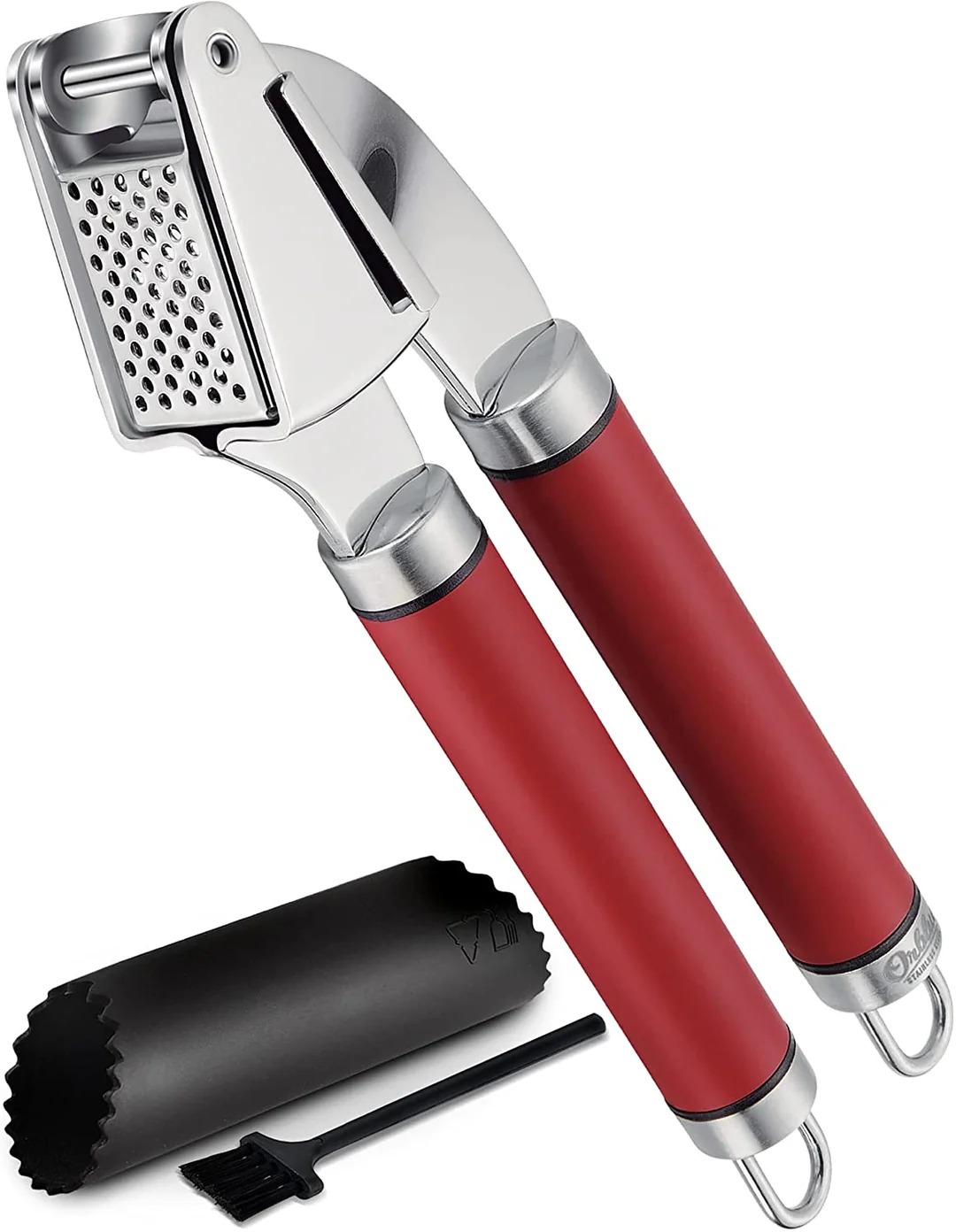
The true revolution in garlic preparation arrived with the invention of the mechanical garlic press. Credited to Swiss inventor Karl Zysset, founder of the Zyliss company, the garlic press offered a novel solution: a simple lever mechanism to force garlic through a perforated plate, transforming whole cloves into a fine paste with minimal effort. This innovation quickly became a staple in kitchens worldwide, streamlining meal prep and making garlic a more accessible ingredient for everyday cooks. As kitchen technology advanced, so too did the garlic press, leading to the development of multi-functional designs that aimed to offer even greater versatility, giving rise to tools that sometimes combined pressing with a “slicer” feature to cater to diverse culinary needs.
Understanding the Garlic Press Slicer: Beyond Just Crushing
At its core, a garlic press functions by leverage, transforming a whole garlic clove into a fine mince or paste. However, the term “garlic press slicer” suggests a tool with a broader range of capabilities. While many presses excel at mincing, some innovative designs integrate features intended to create finer cuts, or even slices, appealing to cooks who desire different textures.
Structure and Working Mechanism
Most garlic presses, including those with “slicer” aspirations, consist of two hinged handles, a chamber (or hopper) where you place the garlic, and a perforated plate (the sieve) through which the garlic is forced by a plunger. When you squeeze the handles, the plunger pushes the clove against the sieve, extruding the garlic in tiny, uniform pieces. The key to its efficiency lies in this simple mechanical advantage, allowing even unpeeled cloves to be processed with ease.
The “Slicer” Dimension: Examining Multi-Function Tools
While a traditional press excels at mincing, the “slicer” component in a multi-function garlic press aims to offer varied textures. Some models feature interchangeable plates or a separate chamber with blades designed to produce thin slices or small dice. For example, the Zulay 2-in-1 Garlic Press is noted for having two chambers that can both slice and mince simultaneously. However, it’s important to note that dedicated “slicer” features within a press can sometimes be less efficient or even unwieldy compared to using a sharp knife for precision slicing. The effectiveness of the slicing function can vary greatly by brand and design, with some models being discontinued due to poor performance in this regard. Other types, like twisting presses, use cross-cutting “teeth” to achieve a finer, more chopped texture that some might associate with slicing.
The Art of Usage: Getting the Most from Your Garlic Press Slicer
Using a garlic press slicer is straightforward, transforming a once tedious task into a quick and enjoyable part of cooking.
Step-by-Step Guide for Optimal Results
- Prepare Your Garlic: Begin by selecting fresh garlic cloves. You don’t necessarily need to peel them; many modern presses are robust enough to handle unpeeled cloves, with the peel remaining in the chamber for easy disposal. If you prefer, a quick smash with the side of a knife can loosen the skin for easy peeling.
- Open the Press: Pull the handles apart to open the chamber where the garlic will be placed.
- Insert the Clove(s): Place one or more cloves into the chamber, depending on its capacity. For multi-function models, ensure you’re using the correct chamber for mincing or the designated area for slicing, if applicable.
- Press with Purpose: Grip both handles firmly and squeeze them together. Apply steady pressure to push the garlic through the perforated plate. You’ll see finely minced garlic emerging from the holes. For models with a slicing mechanism, follow the specific instructions, which might involve a different motion or separate action.
- Remove the Garlic: Use a small spoon, spatula, or the integrated scraper (if your press has one) to scoop the minced or sliced garlic directly into your dish.
Tips and Tricks for Maintenance and Usage
- Pre-Warm with Oil: Spraying a tiny drop of olive oil inside the chamber can help minimize mess and make the garlic slide out more easily.
- Handle Leverage: For traditional presses, using two hands or ensuring a good grip can maximize leverage, especially with tougher cloves.
- Don’t Overfill: Avoid cramming too many cloves into the chamber, as this can reduce efficiency and make pressing harder.
- Consider Peel or No Peel: While many presses handle unpeeled garlic, pressing peeled cloves can sometimes reduce resistance and lead to a slightly cleaner extraction. However, leaving the peel on often makes cleanup easier as the skin helps push out residue.
Maintenance Mastery: Keeping Your Tool Pristine
The longevity and effectiveness of your garlic press slicer heavily depend on proper care. While cleaning can sometimes be a point of frustration for users, modern designs often incorporate features to simplify this task.
Effortless Cleaning Tips
- Immediate Rinse: The best defense against stubborn garlic residue is to rinse your press immediately after use. Warm water and a small brush or even a toothpick can dislodge any trapped bits.
- Self-Cleaning Mechanisms: Many contemporary garlic presses come with built-in cleaning tools, such as hinged screens that flip open, or plungers with pins that push out excess garlic and clear the holes. Some advanced models even feature self-ejecting peels or integrated scrapers. These features drastically reduce the effort required for cleanup.
- Removable Parts: Look for presses with removable parts, especially the sieve, as these can be easier to clean thoroughly.
- Dishwasher Safe: Most stainless steel garlic presses are dishwasher safe, offering ultimate convenience. However, hand-washing is often recommended for aluminum models to prevent discoloration.
- Odor Removal: For lingering garlic odor on stainless steel presses, simply rub your hands on the smooth metal surface under running water after washing – it’s a neat trick!
Proper Storage
Once clean and dry, store your garlic press slicer in a drawer or hang it by its handles, if it has a hanging loop. Keeping it dry is crucial to prevent rust, especially for stainless steel models, though they are generally rust-resistant.
Why Every Kitchen Needs One: Benefits Beyond Convenience
Despite some culinary purists’ skepticism, the garlic press slicer offers undeniable advantages for the home cook, making it an indispensable tool for a smart kitchen.
Time-Saving Powerhouse
Mincing garlic by hand can be a fiddly and time-consuming task, especially when a recipe calls for multiple cloves. A garlic press slicer drastically cuts down prep time, transforming whole cloves into ready-to-use garlic in mere seconds. “In a busy kitchen, every second counts,” says Chef Anya Petrova, a renowned culinary innovator. “A good garlic press is a game-changer for efficiency without compromising flavor.”
Consistent Texture, Enhanced Flavor
The uniform mince produced by a press ensures that garlic flavor is evenly distributed throughout your dish, preventing pockets of overly pungent or under-flavored food. Furthermore, the crushing action releases more allicin, the compound responsible for garlic’s signature pungent flavor and aroma. This means a garlic press can actually intensify the flavor profile of your dishes, a quality celebrated by many home cooks and even some chefs.
Say Goodbye to Garlic Hands
One of the most appreciated benefits is the minimal direct contact with garlic, significantly reducing the lingering odor on your hands. This allows you to move seamlessly from garlic prep to other tasks without repeated hand washing or worrying about transferring the smell.
Effortless and Accessible Cooking
For those with limited hand strength, arthritis, or simply looking for an easier way to prepare garlic, a press provides significant mechanical advantage, requiring minimal effort to produce perfectly minced garlic. It also makes cooking with fresh garlic more accessible and enjoyable for everyone.
A Safer Kitchen Tool
Compared to handling a sharp knife for mincing, a garlic press is a much safer option, making it an excellent tool for involving children in kitchen tasks or for cooks who prefer to minimize knife work.
Navigating the Market: Choosing Your Ideal Garlic Press Slicer
With a variety of models available, selecting the perfect garlic press slicer for your kitchen requires considering a few key factors.
Types of Garlic Presses
- Traditional Squeeze Press: The most common type, featuring two handles that you squeeze together. These are excellent for fine mincing and are widely available. Look for models with comfortable, ergonomic handles for easier operation.
- Rocker Press: These tools are placed over a garlic clove on a cutting board and rocked back and forth, pressing the garlic through holes. They are often praised for ease of use, especially for those with grip issues, and can be easier to clean.
- Twisting Press: These models usually consist of two pieces that you twist to chop or “slice” garlic through cross-cutting teeth. They often require pre-peeling the garlic but can offer a unique texture.
- Multi-Function Presses: Some presses attempt to combine mincing with slicing or dicing capabilities, often through interchangeable plates or separate compartments. While versatile in theory, evaluate reviews carefully for the effectiveness of each function, as dedicated slicing can sometimes be less efficient than using a knife.
Material Matters
- Stainless Steel: The most popular choice, renowned for its durability, sturdiness, and resistance to rust. Stainless steel presses can handle tougher cloves and are generally dishwasher safe.
- Zinc Alloy/Aluminum: Lighter and often more affordable, but may not be as robust or resistant to discoloration over time, particularly in dishwashers.
- BPA-Free Plastic: Used in some twist-style presses, offering a lightweight option.
Ergonomics, Capacity, and Cleaning Features
- Comfortable Handles: Look for presses with wide, padded, or ergonomically designed handles that feel good in your hand and provide ample leverage.
- Capacity: Consider how many cloves you typically process. Presses with a larger hopper can handle multiple cloves at once, saving time.
- Ease of Cleaning: This is a crucial factor. Prioritize models with self-cleaning mechanisms, removable parts, or designs that open fully for easy rinsing.
Frequently Asked Questions
Do I need to peel garlic before using a garlic press slicer?
No, many modern garlic presses are designed to handle unpeeled cloves. The peel often remains in the chamber, making for easy disposal and sometimes even aiding in the cleaning process.
Does pressing garlic change its flavor compared to mincing with a knife?
Yes, crushing garlic through a press releases more allicin, the compound responsible for garlic’s pungent flavor, resulting in a more intense taste. Some chefs prefer knife-minced garlic for a milder flavor, while others appreciate the stronger punch from pressed garlic.
Are garlic press slicers difficult to clean?
While cleaning can be a common complaint for older designs, many contemporary garlic presses feature self-cleaning mechanisms, removable parts, or wide-opening designs that make rinsing and washing much easier. Most are also dishwasher safe.
What type of garlic press slicer is best for me?
If you prioritize ease of use and a fine mince, a traditional squeeze press with ergonomic handles is a great choice. For those with grip issues, a rocker press can be very effective. If you’re specifically looking for a “slicer” function, carefully research multi-function models and consider a good knife as an alternative for precise slicing.
Can I use a garlic press slicer for other ingredients?
While primarily designed for garlic, some presses can also handle ginger, particularly those with larger holes or robust construction. Always check the manufacturer’s recommendations.
The Future of Flavor: Embrace Your Garlic Press Slicer
The garlic press slicer, in its various forms, stands as a testament to intelligent kitchen design, bridging the gap between traditional techniques and modern convenience. It’s a tool that empowers you to infuse your cooking with the vibrant taste of fresh garlic, effortlessly transforming cloves into the perfect mince or slice for any dish. Embrace this essential kitchen companion to save time, enhance flavors, and make every meal a masterpiece. We encourage you to explore the diverse range of garlic press slicers available, find the one that best fits your culinary style, and share your own experiences with this remarkable kitchen innovation.